Hello, Good Friends,
“Like jewels in a crown, the precious stones glittered in the queen’s round, metal hat.”
-Jack Handy, Saturday Night Live
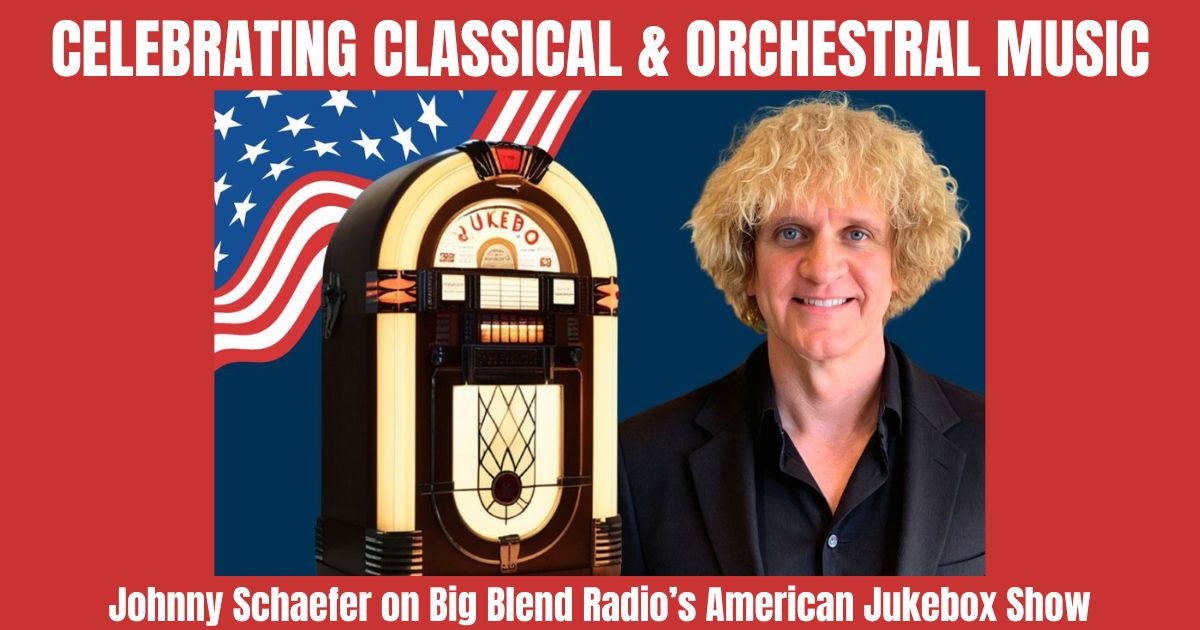
Jack Handy is one of my all-time favorite Saturday Night Live bits, and the quote above is my favorite. In our year-long Big Blend Radio Podcast jukebox exploration of the many facets of music in the US over the past quarter of a millennium, Lisa Smith and I wanted to take a peek at some Classical music gems. As you may have heard these past few months, we are now able to integrate the songs we discuss into the podcast when you listen on MixCloud. On other platforms, you need to play them separately on our Spotify Playlist. Time constraints limit us to three songs each, and Lisa’s amazing Mom and co-founder of Big Blend Radio Media House chooses one, too.
For my three selections, I tried to get a diverse cross-section of composers. Composer Florence Price, who was born in 1887 and died in 1953, once wrote to a fellow composer saying that she had two strikes against her, being black and being female. She wanted him to give her an honest assessment of her work without those two qualifiers. Indeed, during her lifetime, many critics focused on the “novelties” of her race and gender more than her music. But, as time goes by, music lovers are appreciating her music itself. In 2009, a large collection of her unpublished music was found in her old summer home, escalating respect for her. She is the first black female composer to have a piece performed by a major orchestra. When I first heard her music, it called to mind Anton Dvorak and then I discovered that he actually stated that American Classical music should be rooted in African American folk traditions. Florence obtained a dual degree in piano pedagogy and organ performance from the New England Conservatory of Music. She listed her hometown as Pueblo, Mexico to avoid discrimination against African Americans and she and her husband moved to Chicago to escape the Jim Crow South. She became a part of the Chicago Black Renaissance, continuing to study music at top institutions. Like the other composers on our list today, she wrote a wide range of music from art songs and choral works to concertos and symphonies. She frequently integrated spirituals and church music into her work. I chose her piece, Adoration, as a succinct, lush, beautiful example of her work.
I also wanted to pay homage to the beloved choral experience I grew up with, so I chose American composer Morten Lauridsen. “Skip,” as he is affectionately called by friends and colleagues, has influenced many of the people writing for choirs around the world today. His signature harmonic structure is ethereal, shimmering, and warm. Both he and my next choice can be said to write hypnotic music, but in very different ways. I’ve read descriptions of Lauridsen as a “Mystical” composer, which is part of what draws me to him. He weaves elements of chant into his work and his sound envelopes the listener, I’ve included his setting of my favorite poet, Rainer Maria Rilke’s Dirait-on from Les Chansons des Roses. You can hear a couple of cool stories about the song and how I’m one degree separate from him twice on the podcast. Equally exquisite is his O Magnum Mysterium, which you can hear on our extended Spotify playlist.
One can’t exclude films and television when discussing American Classical music. For this podcast, I chose to highlight the work of Philp Glass, for his profound influence on the music of many of today’s film composers. My first experience of his music was in the 1982 film Koyaanisqatsi. My brother, LA Opera singer James Martin Schaefer, has mentioned that Christopher Nolan films frequently feature music by Hans Zimmer or Ludwig Goransson and you can hear the repetitive, pulsing energy Glass perfected in their scores. For this playlist, I am featuring the Epilogue from the opera, Akhenaten, which both my brother and my sister-in-law, Rebecca Thomlinson (Who was featured on a previous episode of Big Blend Radio discussing opera) have performed. It’s a snapshot of his style, his harmonic writing, his orchestration, and the pulsing pad that runs through most of his music.
The extended Spotify Playlist Lisa and I created includes work by some of my colleagues which can be said to live in the Classical world including Geoff Levin, Stephan Oberhoff, and Melissa Manchester. Lisa’s selections are Michael Kamen’s An American Symphony from Mr. Holland’s Opus, Bobby McFerrin performing Pavanne, by my favorite composer, Gabriel Fauré (I got to hear my brother James perform as a featured soloist at a Bobby McFerrin concert in the Orange County Performing Arts Center), and Mars from Gustav Holst’s The Planets.
We are, of course, merely scratching the surface of the vast treasure trove of wondrous music that is categorized as “Classical.” I’ve seen dismissive descriptions of the genre as “Music by a bunch of dead white guys,” but that simply isn’t fair. I hope that this show serves to whet the appetites of listeners who may have shied away from it.
You can find everything you need to dive into this podcast at this link. Enjoy!
If you are receiving this newsletter, you have expressed interest in my music at some point. I hope you will stick around, but feel free to unsubscribe below.